Is an Open-Plan Kitchen Right for Your San Diego Home? 8 Honest Questions | Optimal Home Remodeling & Design

San Diego Kitchen Design Guide

The Open-Plan Kitchen — Is It Right for Your San Diego Home?

For two decades, "knock down the wall" has been the default answer to every kitchen remodel. But after 500+ projects across San Diego, we've learned that the open-plan kitchen is right for some homes and a quiet disaster for others. Here are the 8 honest questions to ask before the sledgehammer comes out.

By Optimal Home Remodeling & Design 11 min read Kitchen Remodeling
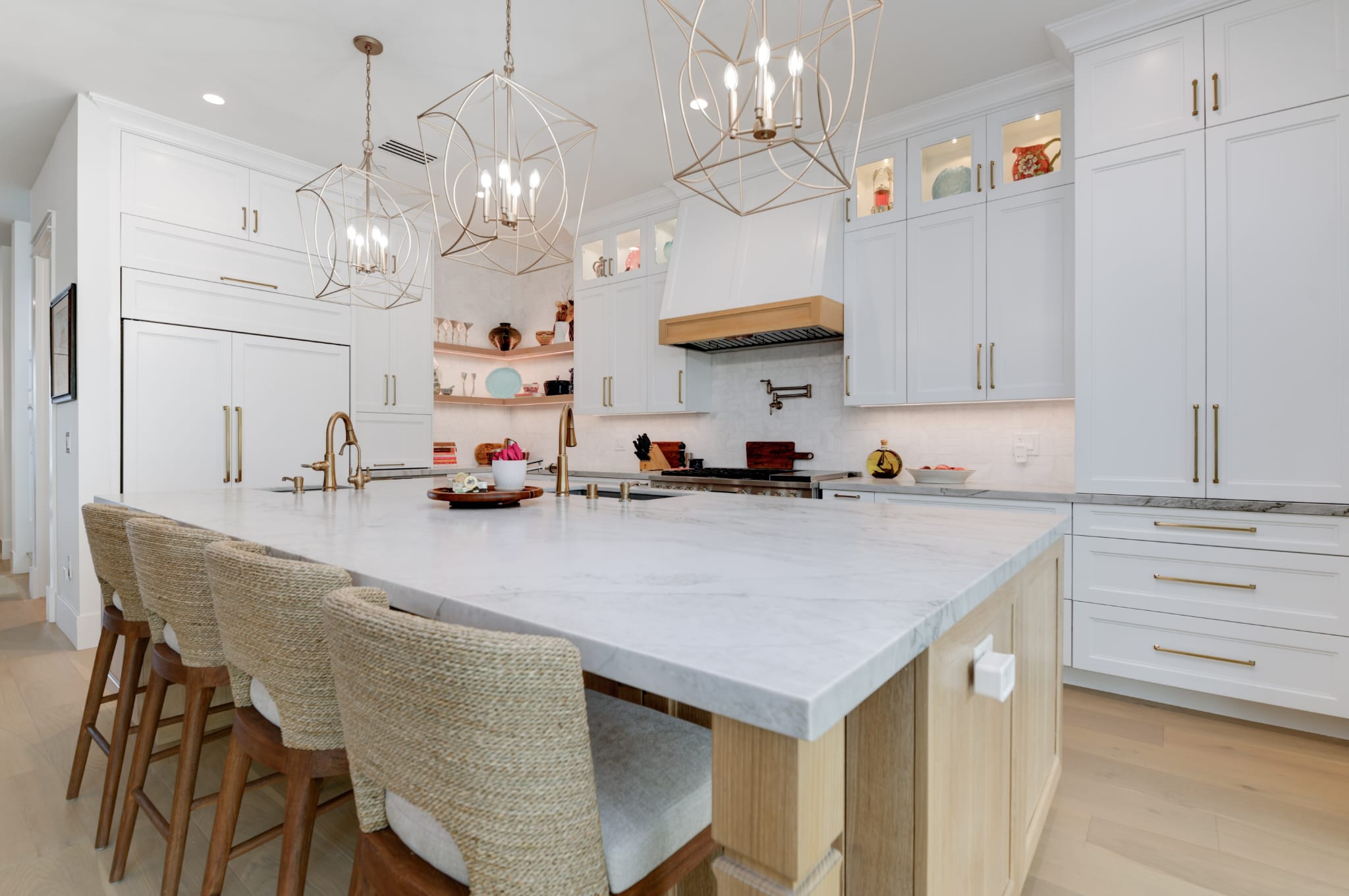
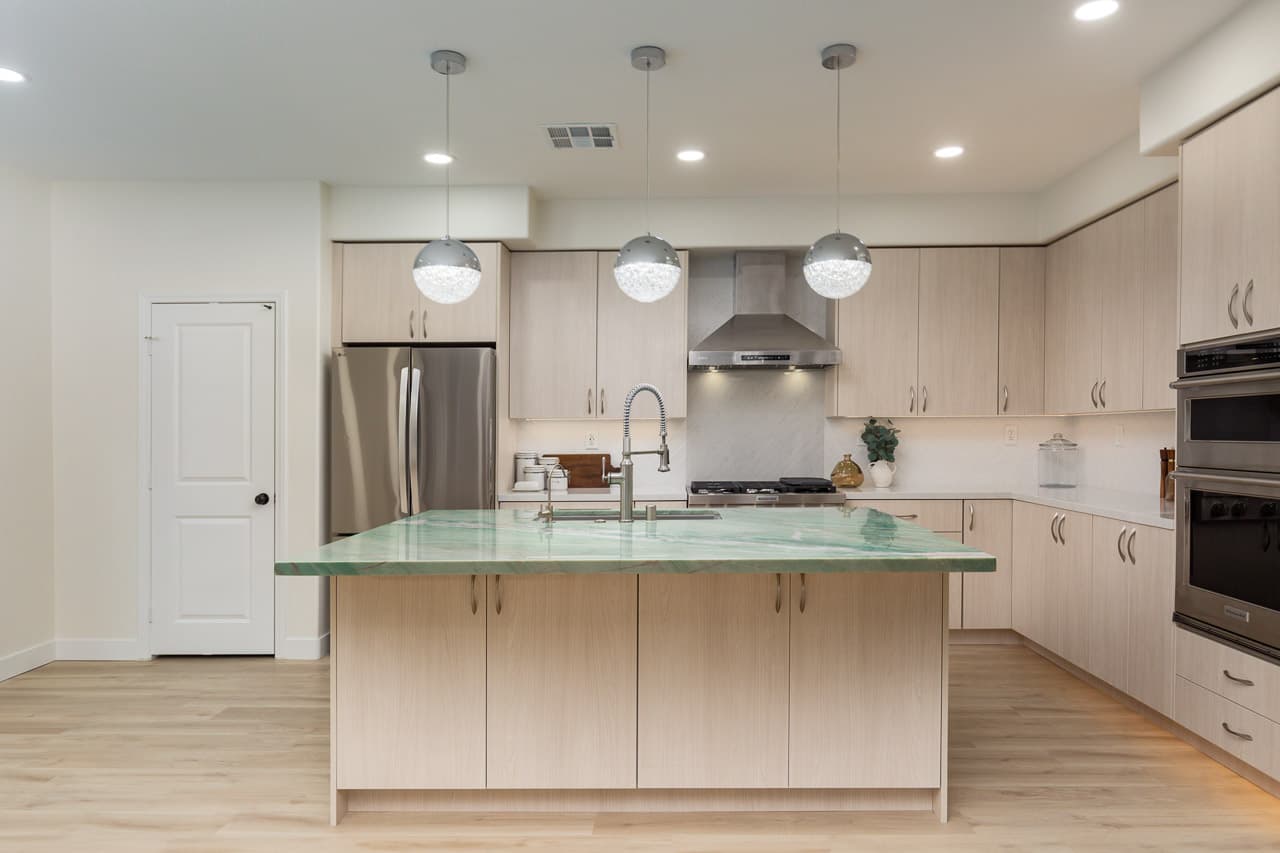
Modern Coastal open-plan kitchen remodel Carlsbad San Diego 92010 — large white oak island with seating, dining and living sight lines, abundant natural light

Open-plan kitchen remodel by Optimal Home Remodeling & Design — when the layout matches the family's lifestyle, an open plan is one of the best decisions you can make. When it doesn't, it's one of the most expensive ones.

Open-plan kitchen remodels usually land in one of three places. Which one are you headed toward?

The Genuine Open Plan

Designed around how you actually live

You entertain regularly, the family naturally gravitates to the kitchen, and the home's architecture supports the change. The result: a flowing, light-filled main floor with a working triangle that's still tight, a back kitchen that handles the mess, and resale value that climbs.

The Default Open Plan

Done because "everyone does it"

You took down the wall because that's what every remodel does now. It's bright and modern. But you've lost the dining room's character, your spouse can hear the TV from the cooktop, and you've discovered you actually don't entertain that often.

The Open Plan Regret

Erased what made the home special

The home lost its architectural soul. Cooking smells travel everywhere. The kitchen mess is always visible from the front door. You're considering putting some of the walls back — at twice the cost of leaving them.

The difference between the three outcomes has very little to do with budget and very much to do with self-awareness — being honest about how you actually live, how often you actually entertain, what your home's architecture actually needs, and whether the open plan is solving a real problem or just answering a trend.

This article isn't anti-open-plan. We design beautiful open kitchens all the time — see our Modern Coastal whole-home remodel in Carlsbad for one we got exactly right. It is, however, an argument for thinking before you demolish. Below are the 8 questions every San Diego homeowner should sit with before signing a contract that includes the words "remove load-bearing wall." If you're already deep into planning a kitchen remodel in San Diego, treat these as a checklist.

Question 01

Why Do You Actually Want an Open Plan?

Start with motive, not method

Ask any San Diego real estate agent what buyers want and "open concept" will come up in the first sentence. That market signal is real — but it doesn't mean the open plan is right for your remodel. There's a difference between designing for resale and designing for the decade you'll actually live in the home.

Before you commit, write down the specific benefit you're chasing. Is it the ability to talk to family while you cook? Better sight lines to a backyard view? More natural light through to the back of the house? A modern, less compartmentalized feel? Each of those goals can often be solved without a full open plan — wider cased openings, a pass-through, French doors, a single relocated window. Total demolition is one tool, not the only one.

If you can't articulate the specific lifestyle improvement you're after, you don't have a design brief yet — you have a Pinterest board. That's the moment to slow down. A licensed design-build firm will help you interrogate the goal before drawing a single line.
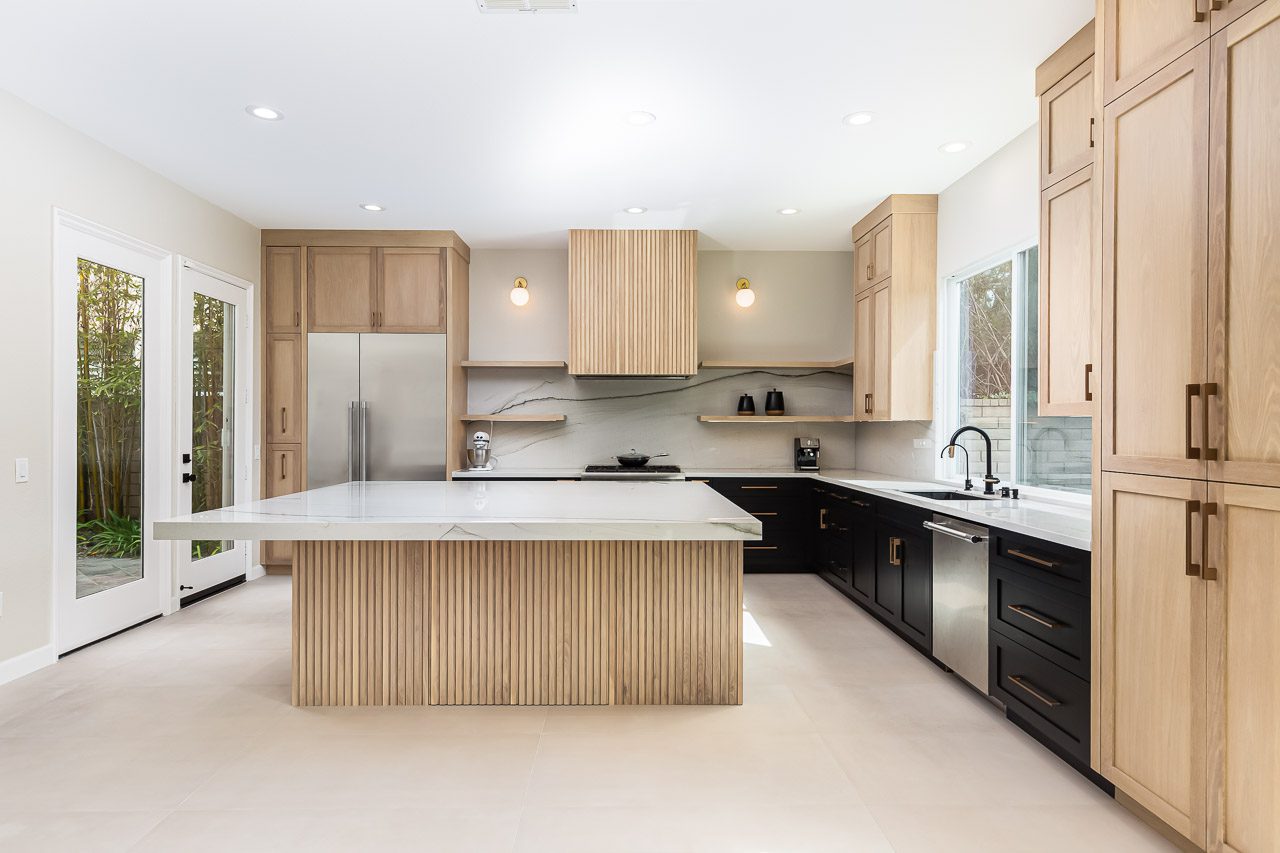
Organic Modern open-plan kitchen remodel Carmel Valley San Diego 92130 — natural wood cabinetry, large stone island, integrated dining sight lines

An open-plan kitchen designed around clear lifestyle goals — daily family flow, regular entertaining, view corridors to the back garden. The "why" came before the floor plan.
Question 02

How Often Do You Really Entertain?

Design for 365 days, not 6

The open-plan kitchen is at its best when you're hosting. Twenty people in the house, kids running between rooms, three conversations happening at once, the cook never feeling cut off from the party. It's the gold standard for entertaining-forward families.

But here's the trap: most households entertain that way three or four times a year. The other 360 days, you're cooking for two or four, and the open plan is doing nothing for you that a well-laid-out traditional kitchen wouldn't. Worse, it's actively working against you on those quieter days — the cooking smells in the living room, the dishwasher noise during a movie, the visible mess from the couch.

Be honest about your real entertaining frequency before letting the entertaining use case drive your floor plan. And if your entertaining is mostly outdoors — which it often is in San Diego — consider whether your remodel dollars are better spent on outdoor living improvements than on demolishing interior walls.

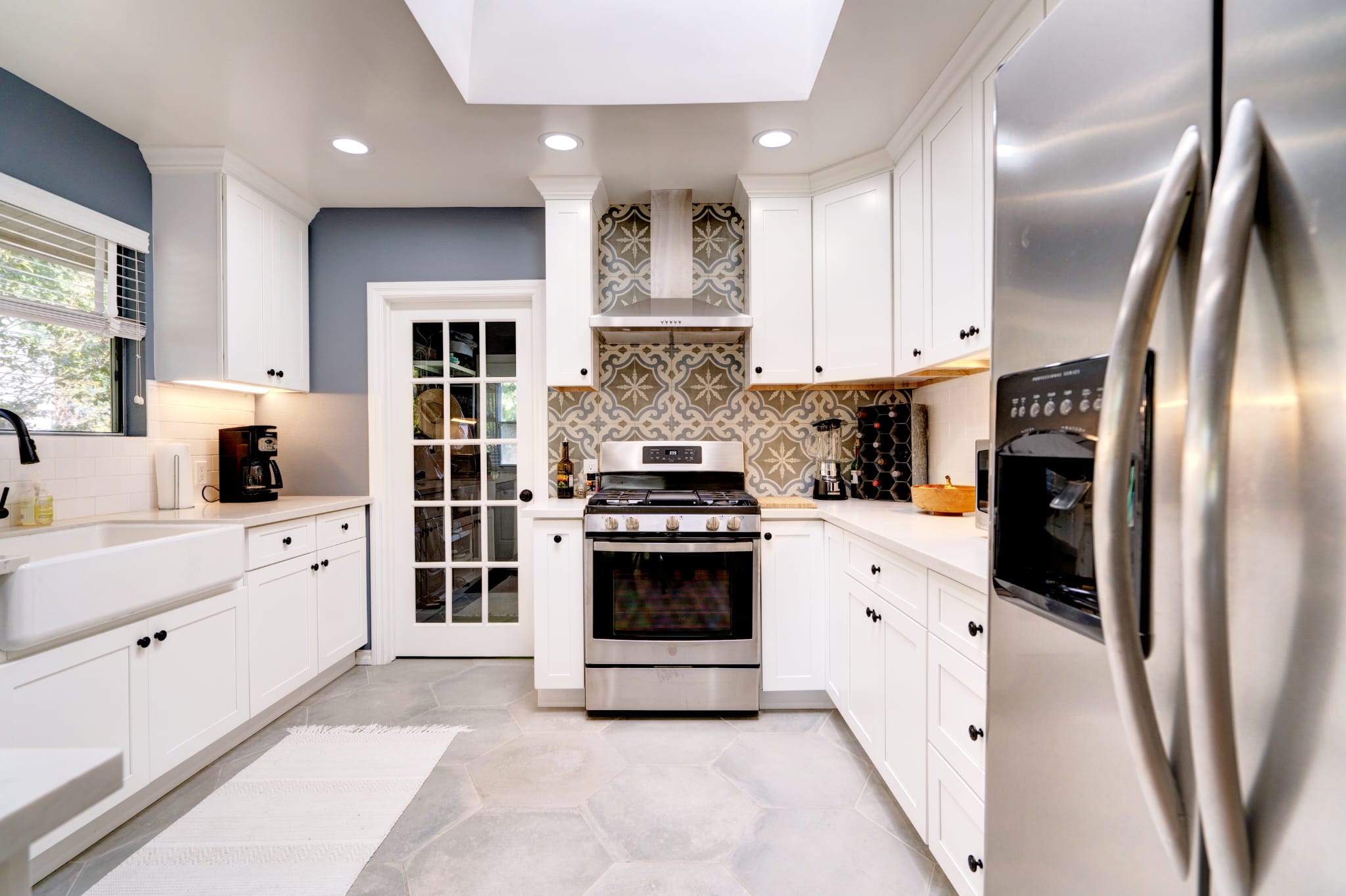
Kitchen renovation San Diego — well-designed everyday kitchen with practical layout, ample storage, and finishes optimized for daily use rather than infrequent entertaining

Design for the 360 days a year you cook for two or four — not the four days a year you host twenty. The best kitchens reward daily life first and absorb the occasional dinner party without breaking stride.

Question 03

How Do You Feel About Visible Mess?

The hidden cost no one warns you about

The dirty secret of open-plan kitchens: everything is always on display. The breakfast dishes from this morning, the prep mess from tonight's dinner, the appliances on the counter, the kid's homework spread across the island. In a traditional kitchen, you can close the door and deal with it tomorrow. In an open plan, it's the centerpiece of your living room.

For households where someone is bothered by visible mess (and that's most households, even if no one will admit it), the open plan creates a low-grade, constant pressure to clean. You either give in to it and lose two extra hours a day to tidying, or you tolerate the visual chaos and lose the calm the home was supposed to provide. Neither is great.

Be honest about this one. If sitting down to dinner with a mountain of dishes visible behind you would ruin the meal, you need a kitchen you can close off — or a back kitchen (see Question 5).

Modern kitchen remodel Chula Vista San Diego 91914 — clean open kitchen with island, range, and sight lines to adjacent living space

The marketing photo and the Tuesday-night reality are not the same kitchen. An open plan has to look reasonable on the worst day, not just on the photoshoot day — which means storage, surface discipline, and a place to hide the dishes.

Question 04

Have You Thought About Smell, Sound, and Climate?

The three invisibles that destroy open plans

Smells. A wall doesn't just block a sight line — it blocks the smell of last night's salmon from settling into your living room curtains. In a fully open plan, every cooking aroma reaches every soft surface in the main living area. A high-performance range hood (600+ CFM, properly vented to the exterior) helps, but it doesn't fully solve the problem. Spice-heavy or fried foods will live in your sofa fabric.

Sound. Range hoods are loud. Dishwashers are loud. Garbage disposals are loud. So is conversation around the island. In an open plan, all of that sound shares one acoustic envelope with the TV, the kids doing homework, and your phone call. If your household includes anyone who needs a quiet space to work or relax at unpredictable times, factor that in.

Climate. San Diego's climate is forgiving — we don't have to fight Boston winters or Phoenix summers. But large open spaces still heat and cool less efficiently than smaller zones, and many older San Diego homes were built without the HVAC sizing for one continuous 800-square-foot great room. Confirm with your contractor that the existing system can handle the new airflow before you commit.

Range Hood Spec We Use as a Baseline

For any open-plan kitchen, we specify a minimum 600 CFM externally vented hood (not recirculating), with make-up air if the CFM exceeds 400 per local code. Recirculating hoods do nothing meaningful about smells in an open plan. This is the single most important air-quality investment in the entire remodel.

Question 05

Have You Considered the Working Pantry / Back Kitchen?

The hybrid that gives you both

The fastest-growing solution to the open-plan dilemma isn't a return to closed kitchens — it's the working pantry (also called a back kitchen, scullery, or messy kitchen). The idea: keep the showpiece "front kitchen" open to the living and dining areas, and put a smaller, fully functional secondary kitchen behind a door.

The back kitchen handles the heavy prep, the food storage, the second dishwasher, the small-appliance clutter, the recycling, and often a second sink and additional fridge or freezer. The front kitchen stays beautiful — minimal countertop appliances, clean sight lines, ready for guests at any moment. When you entertain, prep happens in the back, presentation happens in the front, and your dinner guests never see the chaos.

The catch: a working pantry needs roughly 80–140 additional square feet. In a 1,400 sq ft single-story Crown Point bungalow this is hard. In a 2,800 sq ft North County two-story, it's often achievable by repurposing a laundry room or oversized pantry. Our Organic Modern whole-home remodel in Carmel Valley is a good example of how a thoughtful working pantry integrates into an otherwise open floor plan.

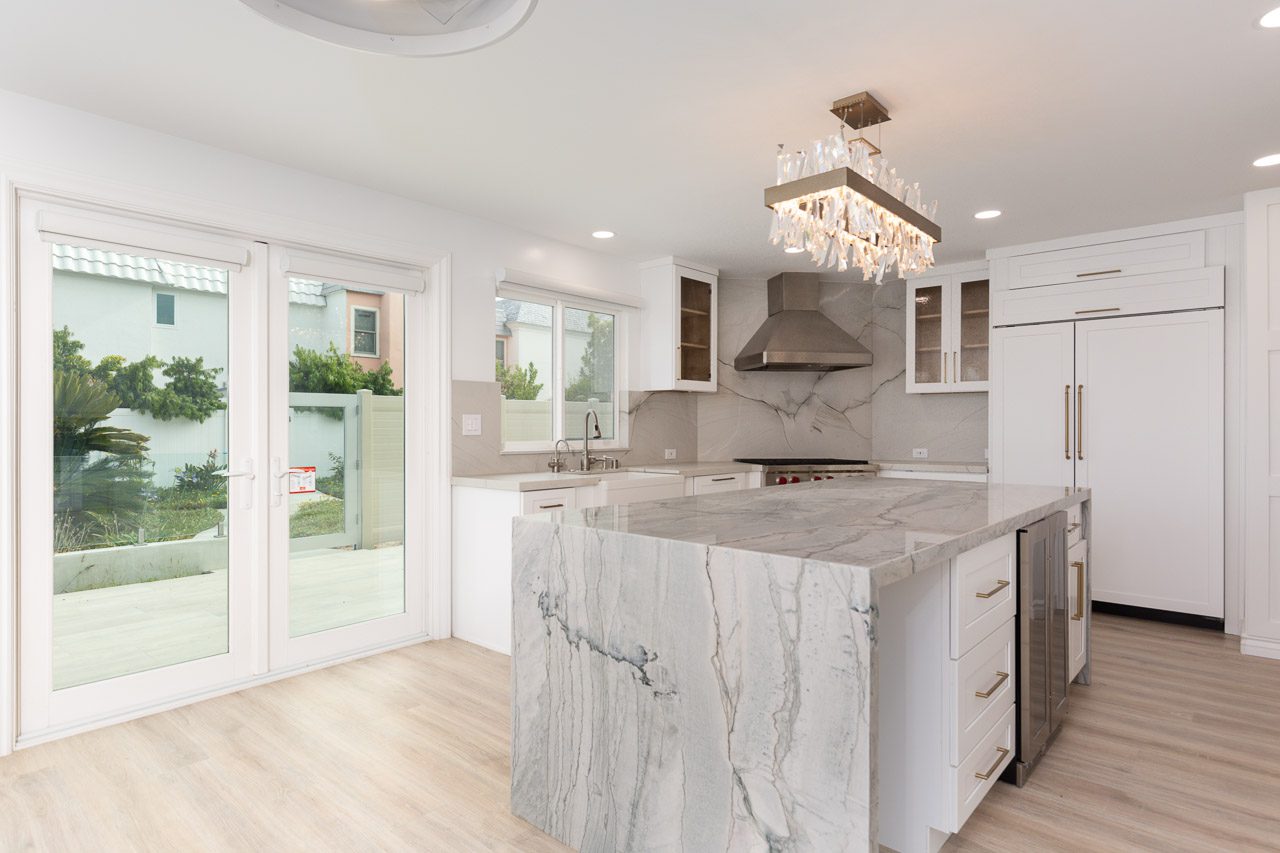
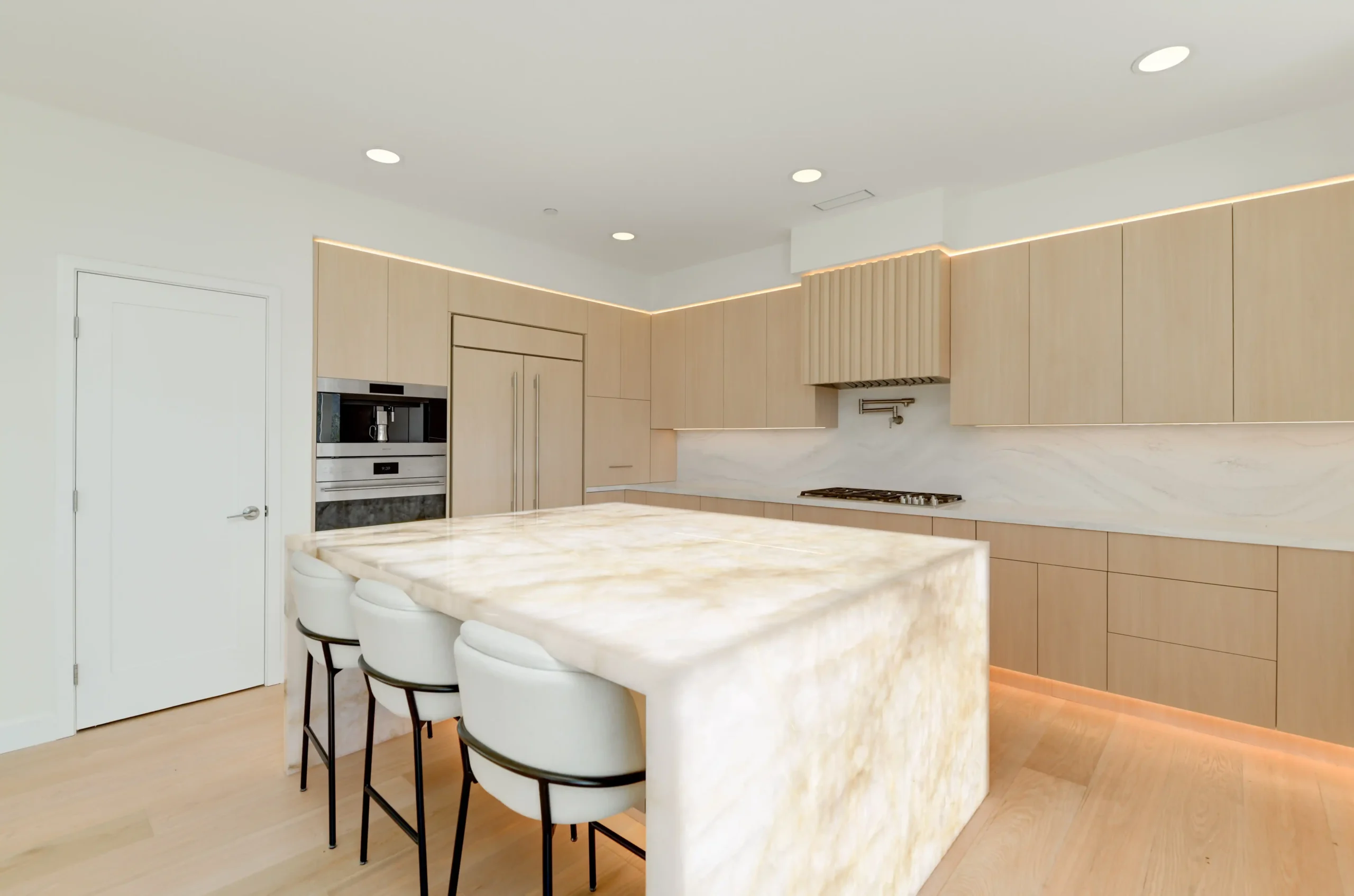
Luxury open-plan kitchen remodel San Diego — slab waterfall island, fluted cabinetry, photogenic front kitchen with adjacent working pantry behind the wall

A "front kitchen" that stays photogenic for guests — slab waterfall island, minimal countertop clutter, clean sight lines. The heavy prep, second dishwasher, and small-appliance storage live in an adjacent working pantry, out of view.

Question 06

Have You Kept the Work Triangle Compact?

Bigger doesn't mean better

One of the most common open-plan mistakes: assuming that a larger kitchen footprint means a better-working kitchen. It almost always means the opposite. When the sink is 14 feet from the range and the fridge is across the island, every meal becomes an Olympic event. Steps add up. Backs hurt. Spilled water travels.

The classic kitchen work triangle — sink, range, refrigerator within a combined 15–25 feet of total leg length — exists for a reason. Even in a 400-square-foot open kitchen, the actual working zone should still be a compact triangle of three to five steps per side. The rest of the footprint becomes secondary work zones (a separate beverage station, a baking area, the working pantry), seating, and circulation — not stretched-out primary cooking.

Our Del Cerro kitchen relocation project is a useful case study here — the new kitchen is open to the great room, but the cook's working triangle is tight and disciplined. Everything you reach for 20 times a meal is one or two steps away.

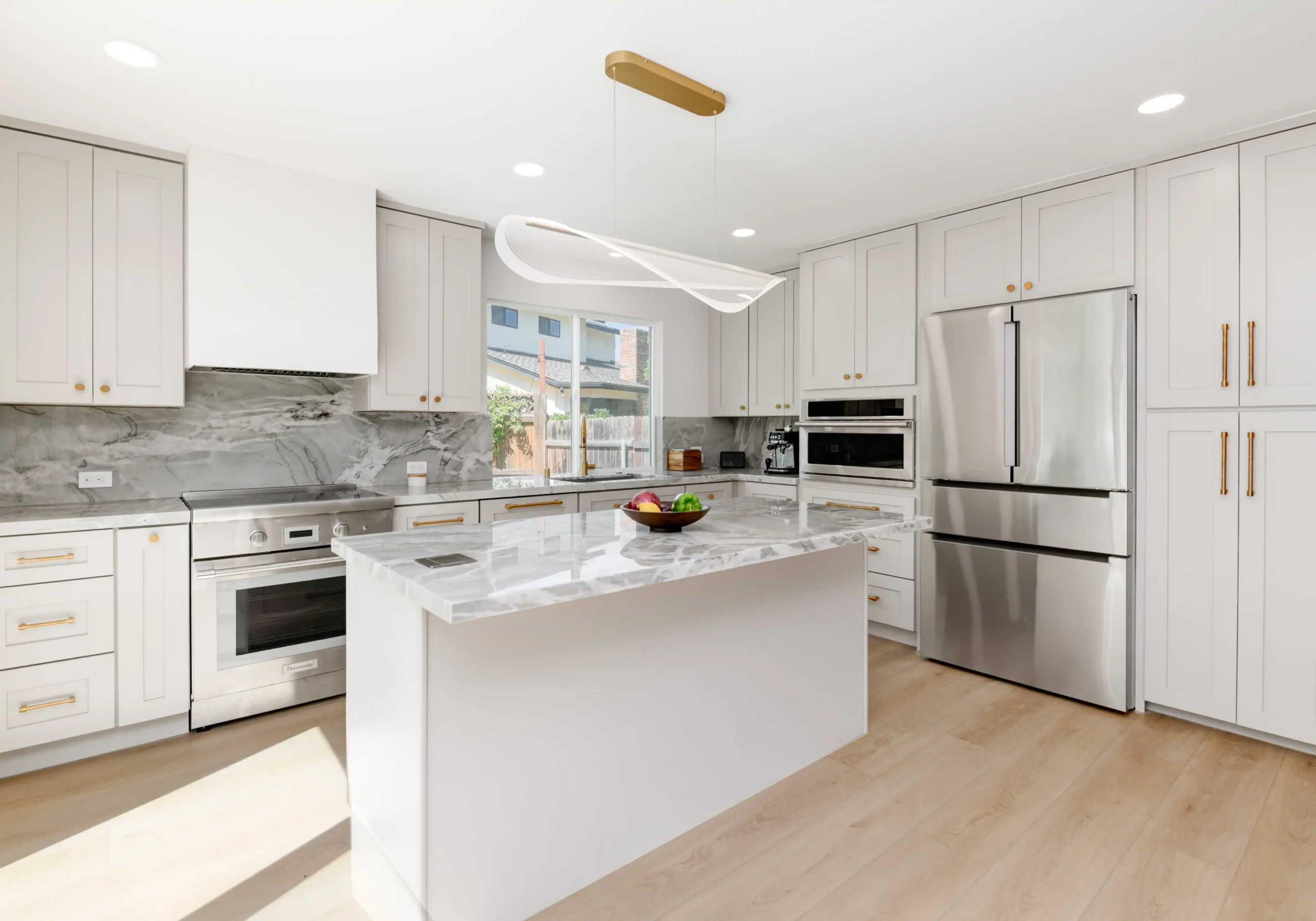
Kitchen island San Diego — large central island in an open-plan kitchen with compact working triangle between sink, range, and refrigerator

The island anchors the room, but it doesn't stretch the work triangle out — sink, range, and refrigerator are still within a tight three-to-five-step working zone. Footprint can be generous; the working core stays disciplined.

Question 07

Are You Resisting the Urge to Over-Plumb?

Specify only what you'll use weekly

Open-plan kitchens tend to attract feature bloat. The room is bigger, the budget is bigger, the showroom is more enticing — and suddenly the plan includes a pot filler over the range, a separate prep sink in the island, a beverage center with its own bar sink, a champagne column, and a pet-feeding station with running water. Each of these has plumbing rough-in cost, finished fixture cost, and ongoing maintenance.

Some are worth it. Most aren't. A pot filler is convenient about four times a year if you do a lot of pasta or stock-making. The rest of the year, you fill the pot at the sink — which is three steps away. A second prep sink in the island is genuinely useful only if two people actually cook side-by-side in your household. Otherwise it's a $1,500 fixture that becomes a glorified produce-rinser.

The rule we use: specify a fixture only if you'll use it at least once a week. Otherwise, redirect the dollars to things you touch every day — the primary faucet, the range, the cabinet hardware, the lighting. Quality where you actually live, restraint where you don't.

San Diego Plumbing Add Costs (Approximate)

Pot filler rough-in + fixture: $1,800–$2,800 · Island prep sink (with plumbing run): $2,500–$4,500 · Beverage center bar sink: $1,500–$2,800 · Second dishwasher rough-in: $1,200–$1,800 plus the appliance. Multiply across a fully-featured open kitchen and you're easily $8,000–$12,000 in plumbing extras. Make sure each one earns its place.

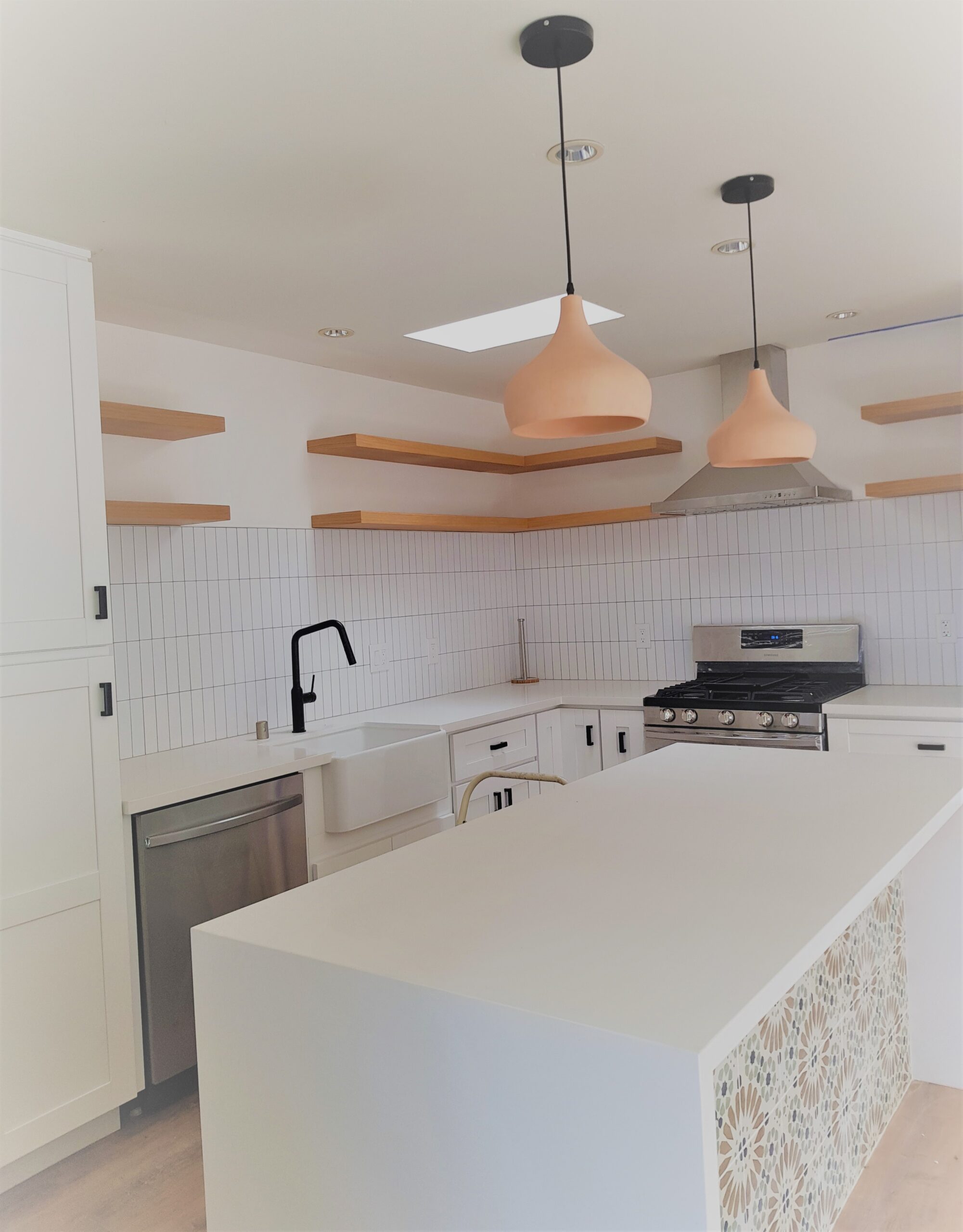
Beach house kitchen design-build Encinitas San Diego — restrained, well-edited open-plan kitchen with single primary sink, clean counters, and disciplined fixture specification

Encinitas beach house kitchen — proof that restraint reads as luxury. One excellent primary faucet, one well-placed sink, no feature bloat. The dollars went into the things touched every day.

Question 08

Are You Preserving the Curated Look?

Wide openings ≠ no walls

The most common regret we hear from open-plan remodels is not "I wish I'd left more walls" — it's "I wish I'd left the right walls." Total demolition treats every wall the same. Selective demolition treats walls as design elements: some come down completely, some get widened into cased openings, some get reframed with pocket doors or French doors that can be opened or closed as needed.

This matters especially for San Diego's older neighborhoods. A 1925 Mission Hills Craftsman has architectural character in its trim, its doorways, its room proportions, and its layered floor plan. A 1960s Mid-Century in Birdrock has it in the strong horizontal lines and the deliberate framing of view corridors. Removing every interior wall to chase an open-plan ideal often erases exactly what made the home worth remodeling instead of replacing.

The middle path: wider cased openings (often 6–10 feet wide), pocket or French doors at key transitions, floor material changes to mark room transitions without walls, and varying ceiling heights or beam details to define zones. You preserve sight lines and natural light without losing the home's identity. You gain the option to close off the kitchen during a dinner party — or to leave it open for a casual family weekend.

Spanish Revival kitchen remodel Mission Hills San Diego 92103 — preserved architectural character, framed openings to adjacent rooms, traditional detailing within an updated layout

A thoughtfully framed opening between kitchen and the rest of the house preserves the architectural identity of an older San Diego home while delivering most of the open-plan light and sight-line benefit.

San Diego Kitchen Remodels

Three Ways We've Answered This Question

Three completed San Diego projects, each landing on a different point along the open-plan spectrum — and each one right for its homeowners.

Plan Your Kitchen Remodel With Us

Talk Through Your Open-Plan Decision Before You Demolish

Optimal Home Remodeling & Design is a licensed San Diego design-build contractor (CSLB #1091450). We walk through your home, your lifestyle, and your goals before we draw a single floor plan — so the open plan you build is the one you'll still love in year ten. Free in-home consultation, itemized estimate within 48 hours, no pressure.

"The right answer to 'should we go open-plan?' isn't yes or no. It's: how do you actually live, and what does this specific home want to become?"

If you're researching a kitchen remodel in San Diego, here's where to keep reading: our kitchen remodeling services page covers our process, pricing, and design approach in depth. Our design-build page explains why architecture, design, and construction under one roof produces better outcomes than the traditional architect-then-contractor split. And our full project portfolio shows finished San Diego kitchens at every scale and style — open, closed, and everything in between.

When you're ready to talk about your project, we're easy to reach: (619) 560-6668 or request a free consultation. We serve all of San Diego County — La Jolla, Del Mar, Carmel Valley, Carlsbad, Encinitas, Solana Beach, Poway, Rancho Bernardo, Coronado, Chula Vista, Mission Hills, Point Loma, Del Cerro, and surrounding communities.